Fall can be one of the most exciting times for bass fishing in Lake Blackshear, especially when shad start moving. Bass are not randomly chasing bait all over the lake. They are following food, comfort, and easy feeding opportunities.
For Lake Blackshear fishermen, that means the bite can change fast. A quiet bank can suddenly come alive with bait flicking on the surface, birds working nearby, or bass pushing shad against shallow cover.
Why Shad Matter So Much in Fall
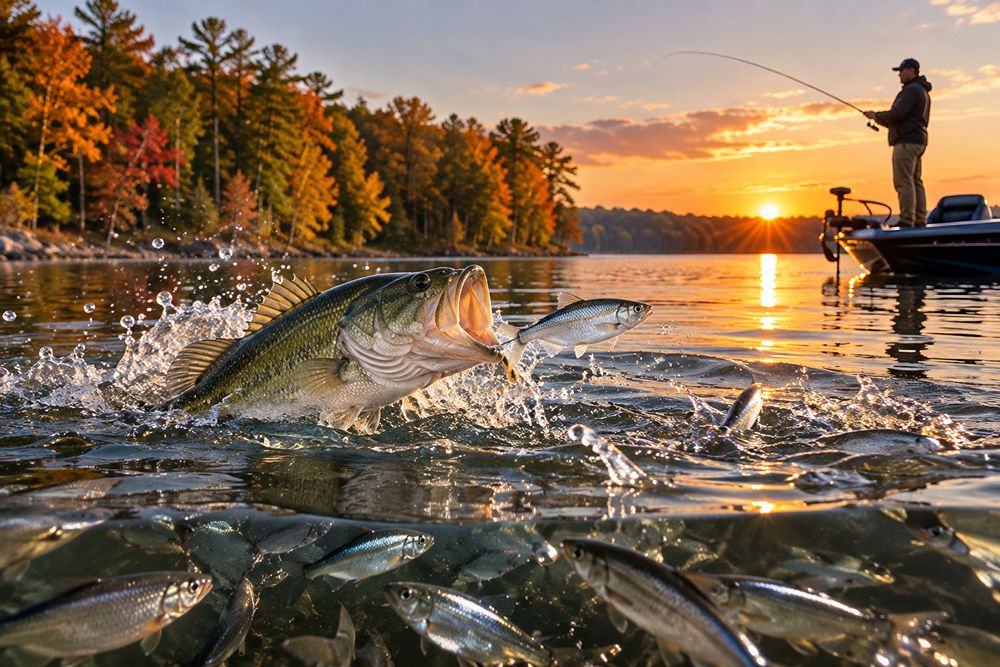
Bass follow because fall is a feeding season. They are trying to take advantage of easy meals before colder winter patterns settle in.
This is why a fall fishing trip can feel very different from summer. Instead of grinding one deep spot all day, you may need to watch for bait movement and adjust more often.
What Triggers the Fall Shad Migration?
A few signs usually tell you the fall pattern is starting:
- You see small baitfish dimpling the surface.
- Birds begin working over shallow water.
- Bass start feeding around points, pockets, and creek mouths.
- The bite improves during cloudy, breezy conditions.
If you want to understand how temperature changes bass movement, your blog “How Water Temperature Affects Bass Behavior in Lake Blackshear” fits naturally with this topic.
Where Bass Move When Shad Start Shifting
Look for areas like creek mouths, shallow flats near deeper water, docks, riprap, grass edges, channel swings, and points close to bait activity.
Georgia’s fishing forecast resources include Lake Blackshear among the state waters covered for species such as largemouth bass, crappie, redear sunfish, and catfish, making it a useful reference before planning a lake-specific trip.
If you are still learning the lake layout, “Where are the Best Fishing spots in Lake Blackshear?” is a strong internal link to add near this section.
How Bass Feed During the Shad Migration
That happens because shad are moving. Bass may group up and attack when the bait gets pinned against a bank, dock line, point, or shallow flat.
The most important skill is observation. Watch the surface, scan for birds, look for nervous bait, and pay attention to wind-blown banks. Wind can push bait into predictable areas, which gives bass a reason to feed.
Best Baits for Fall Shad Patterns
Good fall choices include:
- Spinnerbaits around wind-blown banks
- Crankbaits across shallow flats and points
- Swimbaits where bait is visible
- Topwater baits during low-light feeding windows
- Jerkbaits when bass are chasing but not fully committing
If the water is stained, vibration can help. If the water is clearer, a more natural shad-style presentation may work better.
For readers who want bait ideas by species and situation, “Expert’s Guide: Proven Baits and Lures for Lake Blackshear’s Most Popular Fish” is a helpful internal link here.
Why Timing Matters More in Fall
Early morning can be productive if bait is already shallow. Cloudy afternoons can also be strong because bass may stay active longer. After a cool night, fish may start slower and improve once the sun warms shallow water a little.
This is why many anglers check Lake Blackshear fishing reports before going. Reports can help show whether fish are still relating to deeper summer structure or actively chasing bait shallow.
Common Mistakes Anglers Make During the Shad Migration
Another mistake is fishing too slowly when bass are actively chasing. In fall, moving baits can help you cover water and find feeding fish faster.
A third mistake is ignoring subtle surface activity. Small shad flipping near a dock or point can be enough reason to stop and make several casts.
Should You Book a Guide During Fall?
If you are planning guided fishing trips in Lake Blackshear, your post “How a Local Guide Can Transform Your Lake Blackshear Fishing Experience?” fits well here because it supports the value of local knowledge without interrupting the article flow.
Georgia Bass Rules to Know
Georgia regulations also note a special rule for the Flint River downstream of Warwick Dam near Lake Blackshear: bass between 15 and 20 inches must be released immediately.
Before keeping fish, anglers should review the current Georgia fishing regulations, especially if fishing around connected river sections, public access areas, or unfamiliar water.