Rain can change a fishing day fast on Lake Blackshear. Sometimes it improves the bite. Other times, it muddies the water, shifts fish away from the bank, or makes boating unsafe.
So, when is the best time to go? In most cases, fishing is better after conditions settle, not during dangerous weather. The key is knowing what the rain changed: water clarity, current, oxygen, bait movement, and fish position.
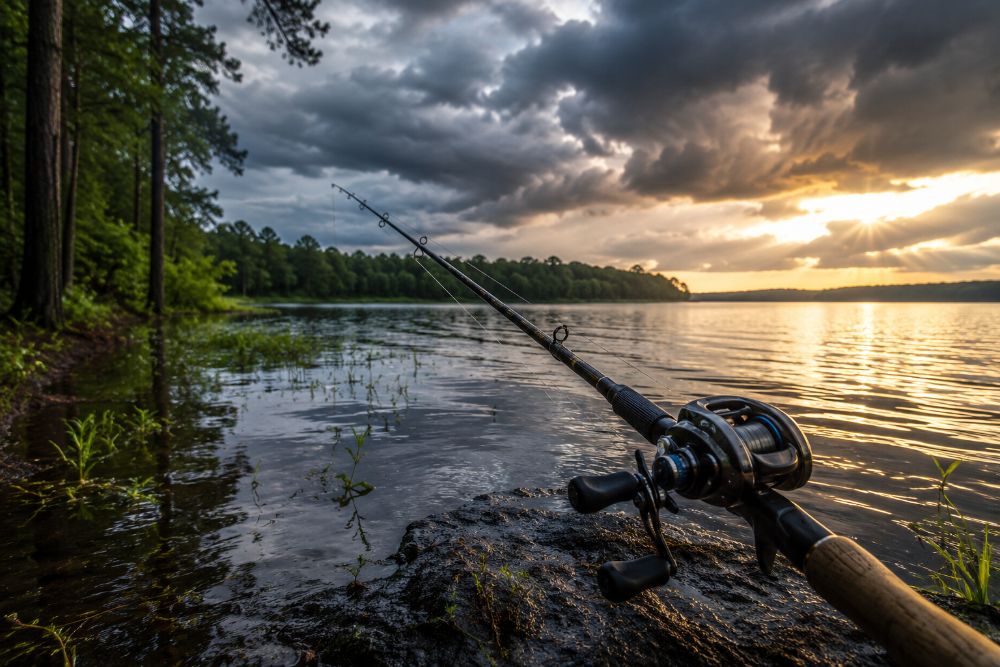
First Rule: Do Not Fish During Active Storms
For a safer trip, avoid being on open water during lightning, strong wind, or fast-moving storms. If you are already out, get to shore as soon as it is safe.
For more trip safety reminders, your post “Staying Safe While Fishing at Lake Blackshear- Few Essential Tips to Follow”
The Best Time Right After Light Rain
The best window is often during light rain or within the first few hours after it stops, as long as there is no lightning or unsafe wind. Fish may move shallower, and baitfish can become more active around banks, points, grass edges, docks, and stained-water lines.
This is a good time to try faster search baits for bass or work live bait near cover for bream and crappie.
After Heavy Rain: Give the Lake Time to Settle
After a strong storm, the better bite often happens 12 to 24 hours later, once the water begins to stabilize. If the lake is still very muddy, focus on areas with slightly cleaner water, current breaks, docks, riprap, creek mouths, and protected pockets.
A good rule is simple: if the water looks too dirty in one area, do not force it. Move until you find a better color change or active bait.
For readers who want to compare general spots, “Where are the Best Fishing spots in Lake Blackshear?” here as a helpful.
What Fish Do After Rain on Lake Blackshear
Bass may move shallow if rain cools the water or pushes bait toward the bank. Georgia’s Lake Blackshear forecast notes that March through June is generally a strong period for largemouth bass, with average fish often in the 12–15 inch range and fair numbers of larger fish available.
Crappie may stay close to structure, especially if the rain comes with a temperature drop. After muddy water moves in, crappie fishing often becomes more about depth control and slower presentations.
Bream can stay active around shallow cover, especially after warm rain. If the rain cools the lake too quickly, they may slide slightly deeper.
Catfish often respond well after rain because runoff can wash food into the lake and create scent trails along edges and channels.
For species-specific planning, “Where to Focus on Bass, Crappie, Catfish, and Bream in Lake Blackshear?”
Best Times by Weather Situation
After a Light Summer Shower
After a Thunderstorm
After Heavy Rain Overnight
After Several Days of Rain
What Baits Work Better After Rain?
Good post-rain options include spinnerbaits, chatter-style baits, crankbaits, live minnows, worms, cut bait, and slower jigs near cover. If the water is only slightly stained, natural colors can still work well.
For bait selection support, add “Expert’s Guide: Proven Baits and Lures for Lake Blackshear’s Most Popular Fish”
Georgia Rules to Remember
Daily limits also matter. Georgia lists a daily limit of 10 total black bass and 30 black and/or white crappie.
If you are targeting bass, size rules may apply depending on the water and species. For a lake-focused support article, “What is the Size Limit for Bass in Lake Blackshear?”
Quick Post-Rain Fishing Checklist
- Is lightning fully gone?
- Is the wind safe for boating?
- Is the water muddy or just stained?
- Can I find baitfish activity?
- Do I need to move deeper or closer to cover?
- Do I have my Georgia fishing license?
These small checks can save time and make your Lake Blackshear fishing trip more productive.