Summer on Lake Blackshear can feel confusing at first. One hour the lake looks calm and lifeless, then you see bait flicker, a bluegill pops on top, or a catfish rod folds over after dark. The difference is usually not luck. It is timing, depth, and knowing where fish slide when the water warms up.
This Lake Blackshear summer fishing guide is built for real trips: the short windows that matter, the patterns that repeat, and the Georgia rules you need to follow while you are out there. Georgia also publishes a fishing forecast for Lake Blackshear that helps set expectations for the lake’s most targeted species. For anglers who want a deeper overview of the area and what makes the lake special, see Exploring Lake Blackshear: A Hidden Gem in Georgia’s Heartland.
A simple way to think about summer on Lake Blackshear
- Low light zone: dawn and dusk, plus cloudy or rainy stretches
- Shade and cover zone: docks, cypress shade, thicker bank cover, deeper shade lines
- Deep comfort zone: channels, drops, humps, and hard-bottom areas when the sun is high
Your job is not to search the entire lake. Your job is to rotate these zones based on the clock.
The heat-window plan that works for most people
Early morning
- Start shallow-to-mid depths near cover
- Work faster baits for reaction bites
- If you see bait, stay in that area longer than you think you should
Midday
- Move to shade and depth
- Slow down your presentation
- Fish structure you can repeat: points, drops, humps, channel edges
Evening
- Return to low light water
- Re-fish productive banks and transition zones
- Expect short flurries rather than nonstop action
This approach is especially helpful for anglers in Lake Blackshear who only have a few hours and do not want to guess. If you want a step-by-step look at how a trip typically works on the water, read Planning Your Guided Trip at Lake Blackshear.
Pattern card 1: Summer bass on structure and hard bottom
What to try
- Early: topwater on seawalls, riprap, and bank cover, then switch quickly
- Midday: slow presentations on channel edges, drops, and humps
- If you graph fish but they will not commit, downsize and slow down
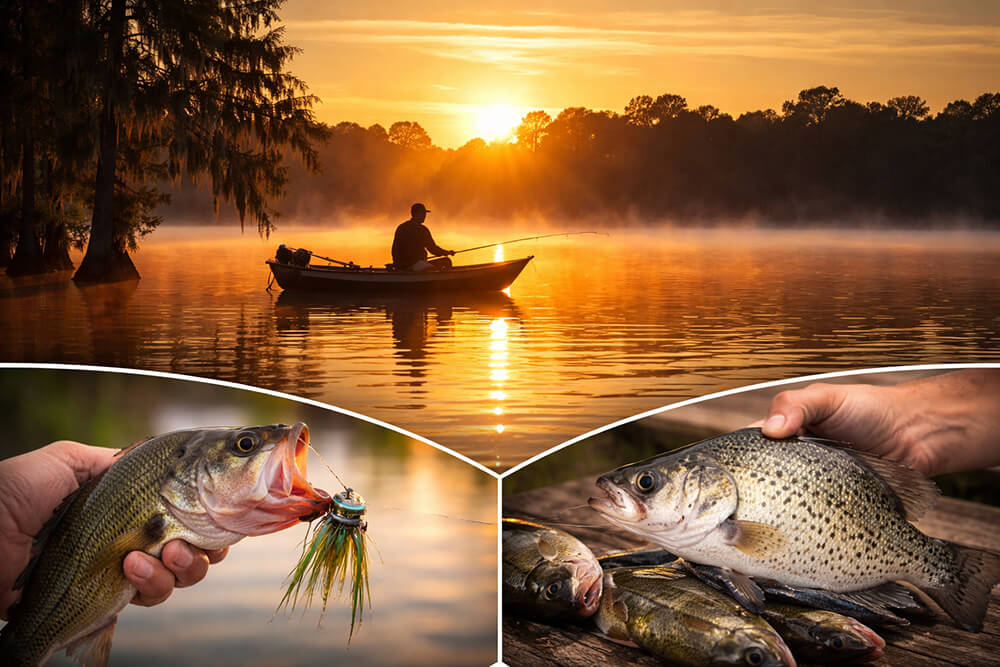
Pattern card 2: Summer crappie, deeper and more vertical
What to try
- Vertical jigging on brush and drops
- Slow trolling when you need to locate suspended fish
- Keep one rod dedicated to depth checking so you can adjust quickly when bites stop
Georgia’s daily limit for crappie is 30 black and or white crappie per person per day.
Pattern card 3: Bream when the sun is high
If your goal is consistent bites, bream are often your best “plan B” when the lake feels slow.
Pattern card 4: Catfish after dark
What to try
- Fish deeper flats near channels after sunset
- Prioritise scent-heavy baits
- Focus on safe, well-known areas if you are unfamiliar with night navigation
If you are unsure which bait types consistently produce across seasons, the guide Expert’s Guide: Proven Baits and Lures for Lake Blackshear’s Most Popular Fish breaks down proven options used by local anglers.
Georgia rules to know before you go
- Fishing license: Georgia requires a fishing license for most anglers age 16 and older.
- Crappie daily limit: 30.
- Black bass daily limit: Georgia lists a 10 fish total daily limit for black bass, with exceptions and sub-limits for certain species and waters.
- Shoal bass note near Lake Blackshear: Georgia’s fishing regulations include a special rule affecting shoal bass on parts of the Flint River downstream of Warwick Dam (Lake Blackshear area). If you fish that stretch, check the specific rule before keeping fish.
Regulations can change, so it is smart to review the current Georgia DNR rules before your trip.